
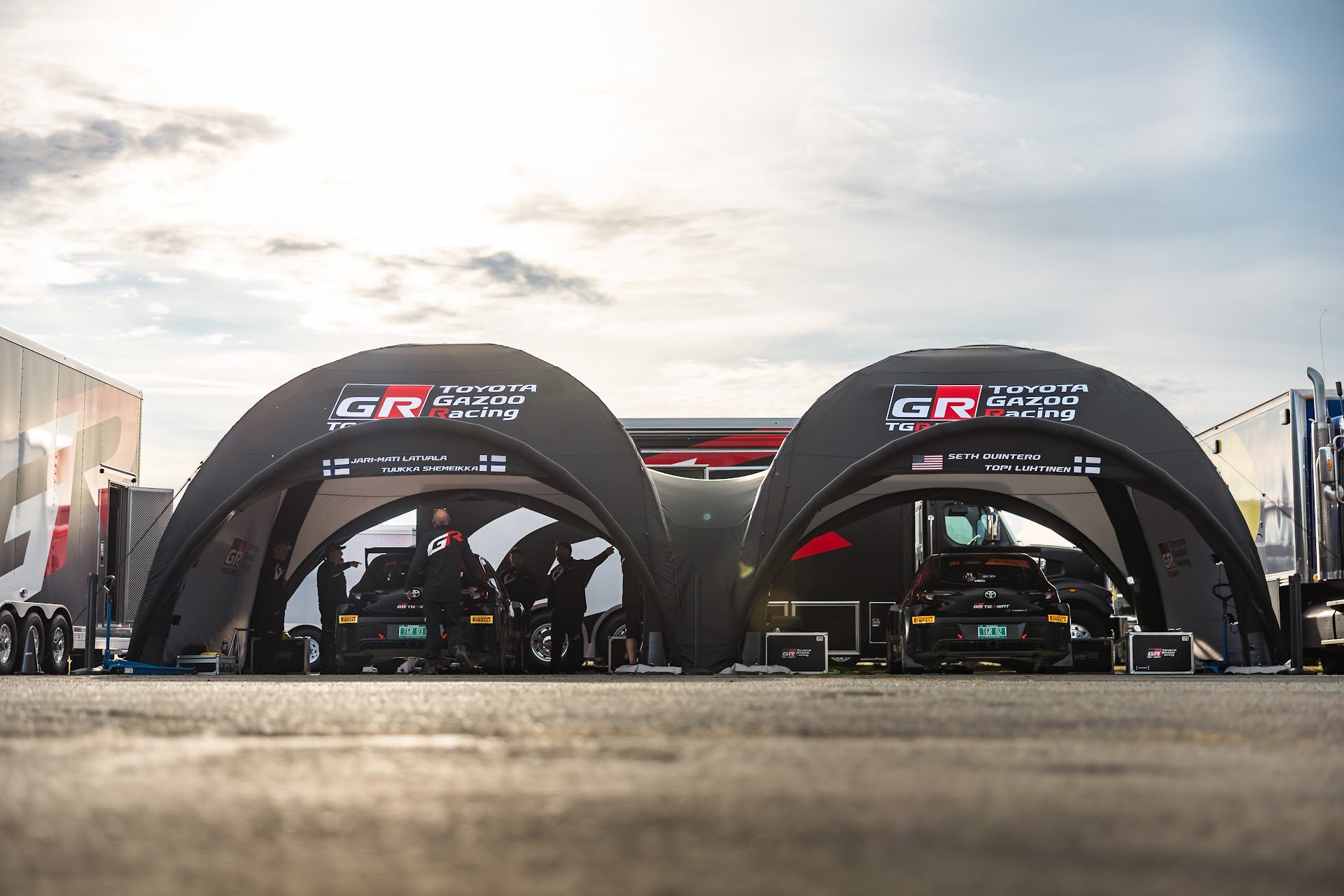
The campaign ends.
The tent does not necessarily have to end with it.
This is where the distinction between the event structure itself and its visual layer becomes important.
When an event system is designed with replaceable branding elements, the supporting structure can potentially be reused while selected graphics are changed for another campaign.
This can be particularly useful for brands running multiple activations, roadshows, launches or seasonal campaigns.
What Is Replaceable Branding?
An event structure consists of two separate considerations:
1. the structure itself,
2. its branded surfaces.
When selected branded elements are removable, changing the campaign does not necessarily require replacing the entire structure.
The same base can therefore potentially serve several campaigns while its visual identity changes according to the activation.
Do You Need a New Tent for Every Campaign?
Not necessarily.
If the structure has been designed from the beginning with replaceable branded elements, the base can remain while selected graphics change.
Consider a brand running:
spring: product launch
summer: festival roadshow
autumn: sampling campaign
winter: sports activation
If the technical and visual system allows the relevant branded surfaces to be changed, a completely new supporting structure may not be required for each campaign.
This also changes the way acquisition cost can be considered.
Instead of buying a tent for one campaign, the company may be investing in an event platform for multiple activations.
Which Parts Can Be Branded?
This depends on the specific product.
Potential branded areas can include:
- roof sections,
- side walls,
- entrance areas,
- supporting elements,
- banners,
- additional textile surfaces.
However, not every branded surface is necessarily replaceable.
That distinction matters:
brandable surface ≠ automatically replaceable surface.
If future campaign changes are important, this requirement should be included in the initial brief.
Why Think About the Next Campaign Before Production?
Because the best moment to consider rebranding is not when marketing sends over the new artwork.
It is before the structure is manufactured.
The initial brief should explain:
- how frequently the structure will be used,
- whether campaigns will change,
- whether one or several brands will use it,
- which visual elements are likely to change,
- which elements should remain timeless,
- whether the structure will be used across different markets.
Those requirements can then inform the design of the system.
One Structure, Multiple Campaigns
Replaceable branding becomes particularly relevant when the lifespan of the structure is longer than the lifespan of the campaign.
A campaign may last three months.
The event infrastructure may be intended for repeated use across multiple activations.
A modular approach can allow
the structure to remain
while
the communication changes.
When Does Replaceable Branding Make the Most Sense?
Roadshows
One structure may travel between locations while selected graphics change for a campaign or market.
Seasonal Campaigns
Product communication may change faster than the infrastructure itself.
Multiple Product Lines
The same physical space may support different launches.
International Events
Language or campaign content may need localisation.
Sponsorship Activations
Partners and messages may change between events.
Long-Term Event Programmes
The more frequently infrastructure is reused, the more valuable visual flexibility can become.
Can Branding Be Changed Between Roadshow Stops?
That depends on the specific branding system.
Replaceable Branding and Cost
Replaceable branding does not automatically mean every solution will be cheaper.
Economics depend on:
- base structure cost,
- number and size of branded surfaces,
- production cost of additional graphic sets,
- number of campaigns,
- frequency of replacement,
- logistics and storage.
The useful question is therefore not only:
“How much does a new branding set cost?”
It is also:
“How many complete event systems would we otherwise need over the same period?”
Calculating Cost Across Repeated Use
A simplified model is:
total cost = base structure + branding sets + servicing + logistics
followed by:
cost per deployment = total cost / number of events
When the same structure serves multiple campaigns, its acquisition cost is distributed across more deployments.
There is no universal number of events after which this becomes economical. Actual costs and usage need to be compared.
Branding Is More Than a Logo
A strong event identity can use:
- colour,
- typography,
- product imagery,
- messaging,
- wayfinding,
- structural form,
- entrance design,
- photo-friendly surfaces.
For replaceable systems, it can therefore be useful to divide the design into:
Long-Term Elements
Visual components intended to remain consistent.
Campaign Elements
Components expected to change regularly.
Planning this distinction in advance can make future updates easier.
What Happens During a Corporate Rebrand?
This is another reason to consider modularity.
A corporate identity update does not necessarily mean that every piece of physical event infrastructure must immediately become obsolete.
Where relevant visual elements are separated from the supporting structure, updating branding without manufacturing a completely new system may be possible.
The actual scope depends on which elements of the original design were permanent and which were replaceable.
Replaceable Branding vs. a New Custom Structure
Replacing graphics is not always the appropriate solution.
If the new activation changes:
- required size,
- function,
- visitor capacity,
- shape,
- technical requirements,
- operating conditions,
a new structure may make more sense.
Replaceable branding works particularly well when the core function remains suitable and primarily the communication changes.
How Should You Brief a Tent Designed for Replaceable Branding?
Answer these questions before production:
How Many Campaigns Should It Support?
One? Three? A different one every quarter?
What Will Change?
Logo, product, headline, language or the complete visual concept?
What Should Remain Universal?
A more timeless base can provide greater flexibility.
How Frequently Will Branding Change?
Once a year and between every roadshow stop are very different requirements.
Where Will It Be Changed?
At a warehouse or directly at the event?
Who Will Change It?
Your event team or a service provider?
These decisions can influence the design from the beginning.
Frequently Asked Questions
Can branding on an inflatable event tent be replaced?
For solutions designed with replaceable branding elements, yes. The exact replaceable areas depend on the model and configuration.
Do I need a new tent for every campaign?
Not necessarily. If the base structure remains suitable and the required branded areas are replaceable, selected visual elements may be updated instead.
Can one tent be used for different products?
Potentially yes, when the structure and branding system have been designed for that type of repeated use.
Can branding be changed during a roadshow?
It may be possible with a replaceable branding system. The procedure, time and crew requirements depend on the specific product.
Is every branded surface replaceable?
Not necessarily. Brandable and replaceable surfaces should be confirmed for the particular structure.
Is replaceable branding worth it?
It can be particularly relevant when one structure is reused across several campaigns, products or markets. Economic value depends on actual costs and number of deployments.
Can the tent be updated after a corporate rebrand?
Potentially, if the relevant visual elements were designed as replaceable components. The extent depends on the original configuration.
Pre-Production Checklist
- ✓ Expected years of use
- ✓ Number of events
- ✓ Number of campaigns
- ✓ Required replaceable areas
- ✓ Product changes
- ✓ Language changes
- ✓ Branding changes on the road
- ✓ Permanent visual elements
- ✓ Storage for additional graphic sets
- ✓ Responsibility for replacement
Conclusion
An event campaign may last weeks or months.
Event infrastructure can have a much longer working life.
It therefore makes sense to separate what should remain from what is expected to change.
With an appropriately designed system, the same inflatable structure can potentially support multiple campaigns while selected branding elements are updated according to current communication.
That is when a branded tent starts becoming something broader:
a reusable event platform.
Need One Event System for Multiple Campaigns?
Tell AXION not only what the structure should look like today, but how you expect to use it in future campaigns.
Explore the AXION range of sealed inflatable event tents, including the SQUARE, CUBE, HEXA, SPIDER and POD.
Customers in the United States can contact ZEPELIN USA directly at sales@axion4event.com or +1 (239) 428 1027.
Design an Event Solution with Replaceable Branding


